How to reduce risk factors of eating leftovers
- Add acidic ingredients to your food, including lemon juice, vinegar, etc. Acidity creates a hostile environment for bacteria growth, remember?
- Store them in the fridge within 2 hours after cooking. Bacteria can quickly multiply under room temperature.
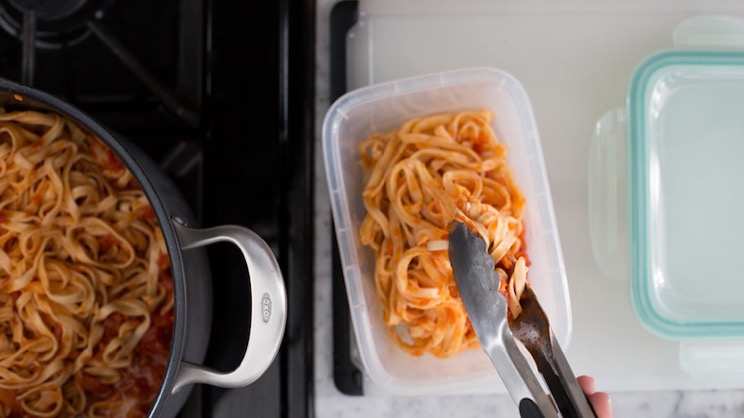
- Store in an airtight container because oxygen can encourage the growth of bacteria.
- Put in the right place. The back of the fridge tends to be cooler than the front.
- Transfer to the freezer as soon as possible if it can't be consumed in time. A common myth is that the freezing cold environment kills bacteria. Wrong, bacteria growth only slows down in the freezer. In general, leftovers can last around 3 months in the freezer.
- Observe, smell, or taste. Firstly, look for signs of mold, which can be in various colors. Some food may also have a slimy film. If the leftovers smell rancid, they are no longer edible. If their flavor is off when you take a bite, spit it off immediately. In either case, you should desert the food immediately.
- Reheat thoroughly. Ideally, reheat the leftovers until the internal temperature reaches 165 °F (74 °C). But not everyone has a food thermometer or has the time to heat up the oven to 165 °F, right? Instead, if your food is not warm enough toward the middle, heat them for an extra minute or so to avoid potential food poisoning.
¿Fue útil esta página ¡Danos un pulgar hacia arriba!
+1Útil ( 53 )
Inútil ( 5 )
Entregar
¡Gracias por tus comentarios!