Should I eat less salt?
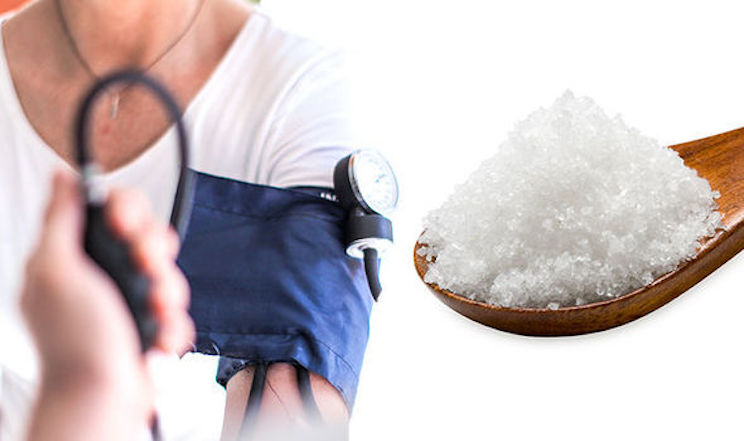
The CDC (Centers for Disease Control and Prevention), the WHO (World Health Organization), and the AHA (American Heart Association) all recommend no more than 1 teaspoon of salt. Why so? The main concern for salt has something to do with sodium. When your body gets more sodium than it needs, the kidney flushes excess sodium out of the system through urine. But when there is still too much sodium, it accumulates between cells inside our body. Water follows sodium to maintain concentration, and more water means a higher volume of blood. As a result, the pressure in blood vessels increases, and the heart has to work extra hard. In the long run, excess salt intake could lead to high blood pressure, heart attack, and heart failure.
BUT...Some people are more salt-sensitive than others. Some people's blood pressure varies as a direct result of their salt intake. Meanwhile, others do not seem to be affected at all.
According to the Harvard Medical School, if you are under the age of 50 or have no conditions like high blood pressure, heart attack, or heart failure, don't worry too much about your sodium intake. But those who are over 50 and have those conditions should keep their sodium intake under 2,300 mg (1 tsp of salt) a day.
¿Fue útil esta página ¡Danos un pulgar hacia arriba!